
A reserve report can show assets above liabilities while a stability assessment remains at its lowest score. The two findings address different questions: what the balance sheet shows at a reporting date, and how the arrangements might perform when conditions become difficult.
According to Cointelegraph, S&P Global Ratings kept USDT at 5, or “weak,” in its November 18, 2026 Stablecoin Stability Assessment, unchanged from November 2025. The report identified additional weaknesses, but 5 is already the bottom of the scale. An unchanged score therefore does not mean that S&P found no new concerns.[2]
PANews, citing The Block, reported that assets classified by S&P as higher risk were equivalent to 28% of USDT in circulation on September 30, compared with 24% a year earlier.[1][2]
For a business using stablecoins to collect or make payments, the useful questions are how much of the liability is covered, how readily the assets can produce cash under stress, and whether a specific payment can reach its beneficiary on time.
What the assessment measures
S&P’s Stablecoin Stability Assessment evaluates a stablecoin’s ability to maintain its link to a fiat currency, considering redemption and secondary-market prices. Its scale runs from 1, “very strong,” to 5, “weak.” S&P explicitly distinguishes this assessment from a credit rating.[3]
The current result means that USDT remains in the weakest category within that framework. It is not a further downgrade, and the score cannot be translated directly into a probability of losing the dollar peg.[2][3]
A record of trading close to one dollar describes past market behaviour. Resilience to falling asset values, concentrated redemption requests or a disruption at a key service provider requires a different analysis. Cointelegraph also reported that S&P acknowledged USDT’s price stability over the preceding twelve months.[2]
Past price stability and a weak forward-looking assessment can therefore coexist. The assessment alone does not establish that a run or a redemption default has occurred.
What the 28% figure actually measures
The denominator is USDT in circulation, not total reserve assets. The move from 24% to 28% is an increase of four percentage points.[1][2]
It does not mean that 28% of USDT is unbacked. Nor does it establish that the remaining 72% consists entirely of cash. The existence of an asset, its value under pressure and the time needed to convert it into dollars are separate questions.
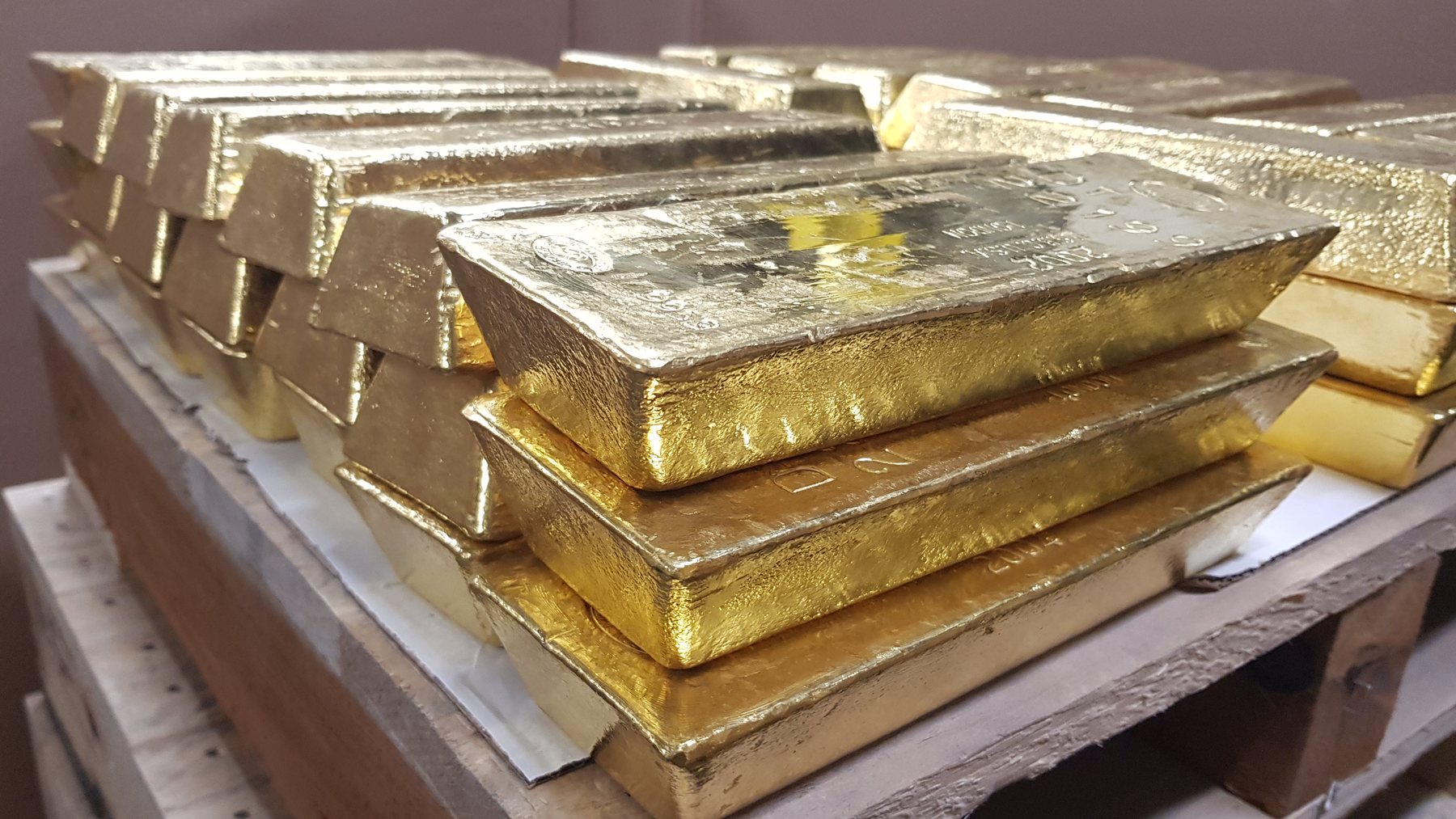
The reported categories include gold, bitcoin, public equities, secured loans, corporate bonds and some investments with limited disclosure.[1][2] Their risks differ. Gold and bitcoin can fluctuate in dollar terms; loans depend on repayment, collateral value and enforcement conditions; other investments require enough disclosure to assess valuation and saleability.
Gold may serve a useful diversification purpose for an investor. A dollar stablecoin must nevertheless meet obligations denominated in dollars. An asset that suits a long holding period may not be convertible into the required dollars at its carrying value whenever those dollars are needed.
Another figure needs careful reading: approximately $4.2 billion was the period-end balance of the report’s Public Equities category. It was not evidence of $4.2 billion in new purchases during the third quarter.
Tether’s quarterly reports put that category at approximately $3.761 billion on June 30, 2026 and $4.178 billion on September 30. Its footnote includes indirect exposure to gold, bitcoin and other assets traded in active markets, so the category should not be read simply as ordinary company shares. The change between two balances may include valuation effects and cannot be treated as net purchases.[5][6]
The available evidence supports an increase in higher-risk exposure relative to circulation under S&P’s classification. It does not separate the contribution of market prices, portfolio allocation and classification changes, or establish that the increase will continue.
Why assets above liabilities do not settle the risk question
Tether’s October 30 announcement reported the following figures for Tether International, S.A. de C.V. as of September 30, 2026:[4]
| Reported item | Approximate amount, US$ billions |
|---|---|
| Total assets | 191.451 |
| Total liabilities | 183.496 |
| Of which: liabilities relating to digital tokens issued | 183.470 |
| Assets in excess of total liabilities | 7.955 |
Token-related liabilities are included in total liabilities; the two are not interchangeable. At that date and under the report’s measurement basis, disclosed assets exceeded disclosed liabilities. The difference provides a cushion against losses.[4]
That cushion can shrink when asset values fall. Consider a purely hypothetical issuer with $105 in assets and $100 in liabilities, including $30 of more volatile assets. If those assets lose 20% of their value and everything else remains unchanged, the issuer loses $6 and has $99 of assets left. Its original $5 cushion would not absorb the loss. This example is neither Tether’s actual portfolio nor a forecast of its losses.
Using the exact figures from the same September report, excess assets were approximately 4.15% of total assets. In a static calculation that holds liabilities and all other factors constant, a proportional fall of that magnitude across asset values would use up the reported cushion. This illustrates the cushion’s size; it is not a forecast of asset losses, a depegging probability or a redemption threshold.[4][5]
Liquidity creates a further question. Even if total asset values still exceed liabilities, can the issuer obtain enough dollars when they are required? Sales take time, concentrated selling can require discounts, and recovering loans or realising collateral may involve constraints. Asset coverage and immediate access to cash need separate checks.
S&P’s methodology accordingly considers asset quality, overcollateralisation and liquidation mechanisms alongside governance, redemption and liquidity, legal arrangements, technology and third-party dependencies.[3]
Tether’s public reporting also states that asset values assume normal trading conditions, rather than extraordinary market conditions or severe illiquidity at key custodians or counterparties.[5] A reporting-date balance is useful evidence, but it cannot by itself answer every question about performance under stress.
What remains unresolved after the audit announcement
The audit discussion has changed. On August 13, 2026, Tether announced that KPMG U.S. had completed a full independent audit of its 2025 financial statements and issued an unqualified opinion.[7]
The publicly available third-quarter reserve document is a different type of report: BDO provided reasonable assurance over financial figures and reserves at a specific date, September 30, 2026. That assurance does not cover every day before or after the reporting date.[5]
The annual audit relates to the financial year ended December 31, 2025, while the quarterly assurance engagement concerns September 30, 2026. The periods and scope differ. A comparison requires the reporting entity and measurement basis to be aligned; two disclosure summaries should not simply be treated as a continuous, comparable growth series.[5][7]
According to Cointelegraph’s account of S&P’s latest report, the audited annual statements and auditor’s report had not been published, and reserve disclosures still contained gaps in information about custodians and counterparties.[2]
The article also describes three specific concerns.[2]
Reserve segregation. The reported concern is a lack of a segregation requirement and sufficient public information about segregation. That limits outsiders’ ability to assess protection from risks elsewhere in the company. It does not establish that the reserves are actually unsegregated.[2]
The 70% and 30-day liquidity criterion. Cointelegraph reports that El Salvador’s digital-assets regulator, CNAD, requires 70% of reserves to be held in assets that can be liquidated within 30 days. The article describes the framework as broad enough to include gold, bitcoin and loans. Being saleable, realising the carrying value and producing dollars before a payment deadline are different tests.[2]
The reporting interval. Cointelegraph reports that Tether’s attestations remain quarterly while other stablecoins generally report monthly. A longer interval leaves a longer gap between observations; it does not itself prove that losses or redemption problems occurred between reports.[2]
Together with reserve composition, these issues explain the focus of the assessment: asset value, the ability to realise cash under stress, and whether external users can examine the relevant safeguards. An audit completion announcement, a quarterly assurance report and full annual audited statements each provide different information.
Businesses can ask which legal entity, date, assets and liabilities a report covers; what has changed since its publication; and whether changes to key service providers or redemption arrangements are documented. Those questions reveal more than the presence of the word “audit” alone.
Where reserve risk meets a business payment
For a finance team, the consequences eventually appear as an amount received or a payment deadline missed.
Suppose a business receives 100,000 dollar stablecoins and intends to convert them to pay a $100,000 supplier invoice. At an executable price of $0.995 per token, it would receive $99,500 before fees and face a $500 shortfall. This is a calculation example, not a current market quote.
Even at a price close to one dollar, conversion processing or bank delivery may take longer than expected. Completion of an on-chain transfer is therefore one stage in the payment journey.
The business should examine three stages separately.
While funds are held: How much will remain in stablecoins, for how long, and what other funds can cover scheduled obligations? Holding time and concentration change the business’s exposure.
When funds are converted: Who executes the conversion, is the quote locked, how long is it valid, what fees apply, and what limits and processing times govern the transaction? A market reference price may differ from the terms executable for a particular business and amount.
When the beneficiary is paid: Which currency and account must receive the funds, what information is required, and who handles delays, rejections or returns? Completion should be measured against the agreed receipt of funds.
A compact funds register can make those checks operational:
| Item to track | Question it should answer |
|---|---|
| Funds held and in transit | How much operating cash is exposed to the same asset or service provider? |
| Required payment date | When must funds be available, and how much delay is acceptable? |
| Executable conversion cost | What amount in the target currency remains after the spread and fees? |
| Exception arrangements | Can an alternative route actually operate if the original route is delayed or unavailable? |
Alternative routes also need to be checked for shared dependencies. Two routes that ultimately rely on the same bank or critical provider may leave the same underlying risk in place.
This is a framework for managing business funds, not a substitute for checking the particular asset, provider, jurisdiction and contract. It does not imply that the current assessment has caused any of these payment problems.
Turn the assessment into a payment decision
The news offers a specific monitoring signal: under the S&P classification reported by the media, higher-risk assets increased relative to USDT circulation while the assessment remained at 5, “weak.” Tether’s reporting for the same quarter showed assets above liabilities at the reporting date.[1][2][4]
The useful follow-up is to monitor reserve composition and the cushion, the availability of supporting disclosures, and executable conversion and delivery terms. A score alone will not capture every point at which a business payment can encounter difficulty.
For an actual payment, the question becomes concrete: By when, in which currency, through which route and at what cost must the money reach the agreed beneficiary account?
Answering it gives a business a basis for assessing its exposure and deciding whether its funding arrangements need to change.
Next step: [Discuss your USDC payment requirements with YiPex](/contact/)
Sources
- 1PANews, report on S&P’s assessment of USDT and the 28% figure. The body is dated November 19, 2026.
- 2Cointelegraph, “Tether invokes The Big Short in swipe at S&P over USDT reserve risks,” November 18, 2026. Reporting on S&P’s assessment.
- 3S&P Global, Stablecoin Assessments, methodology and scale.
- 4Tether, third-quarter financial figures and reserves announcement, October 30, 2026; reporting date September 30, 2026.
- 5BDO, assurance report on Tether International’s financial figures and reserves at September 30, 2026, signed October 30, 2026.
- 6BDO, assurance report on Tether International’s financial figures and reserves at June 30, 2026, signed July 31, 2026.
- 7Tether, announcement of completion of the audit of its 2025 financial statements, August 13, 2026.