
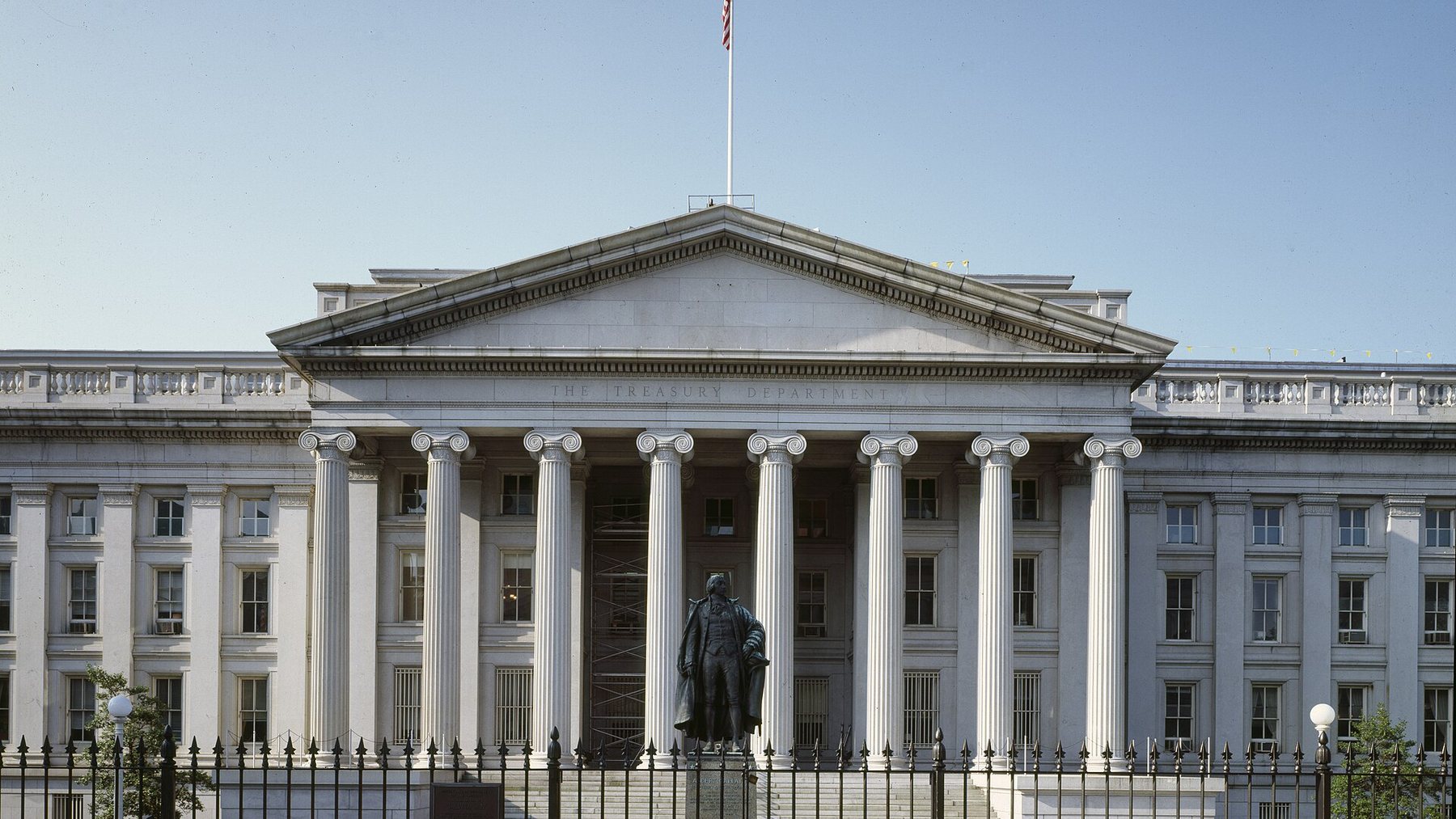
The United States' new stablecoin framework raises a practical transition question: if eligible issuers can choose state or federal oversight, will the procedures for getting there give both routes a workable transition? A choice established in law can still create unequal operational risks when implementation differs.
In a letter dated November 17, 2026, released by Senator Cynthia Lummis's office on November 18, Lummis, Senator Kirsten Gillibrand and four colleagues asked Treasury Secretary Scott Bessent to extend a proposed safe harbor to eligible state-regulated stablecoin issuers. Their concern is uncertainty while states establish regulatory frameworks and undergo certification review. The letter is a policy request; it does not grant an exemption to any issuer.[1][9]
For businesses making cross-border payments, the news does not mean existing payments will immediately change. It does provide a reason to check an issuer's regulatory status, redemption terms and the continuity of the payment route a business intends to use.
1. What the senators are asking Treasury to change
The six signatories are Cynthia Lummis, Kirsten Gillibrand, Angela Alsobrooks, Kevin Cramer, Pete Ricketts and Mark Warner. Their letter concerns Treasury's proposed rules implementing Section 3 of the Guiding and Establishing National Innovation for U.S. Stablecoins Act, or GENIUS Act.[1][9]
The issue is how the two regulatory routes connect to the new framework. Treasury's August 2026 proposal contemplates temporary relief from certain Section 3 prohibitions for specified federal applicants whose applications are pending when the Act takes effect and whose federal regulator grants a waiver. A pending application alone does not create an exemption. The applicant must meet the conditions and receive the regulator's waiver. Subsequent guidance from the Office of the Comptroller of the Currency (OCC) also distinguishes applying for relief from receiving it.[3][5]
For the state route, the regulatory regime must undergo review to establish that it is “substantially similar” to the federal framework. The senators seek protection for issuers in states that establish a framework before January 18, 2028, highlighting uncertainty while certification reviews are pending. That describes the requested scope. It should not be narrowed to states that have already submitted certifications, or read as protection that issuers already possess.[9]
The law does set deadlines for certification decisions. Under 12 U.S.C. § 5903(c)(5)(A), the committee must approve or deny an initial certification or recertification within 30 days after submission. Under § 5903(c)(5)(C)(i), a state regulator notified of a denial must receive at least 180 days from that notification to remedy deficiencies and resubmit.[2] Procedural rules also define what counts as a complete submission for substantive review. These deadlines therefore do not describe the length of the entire transition; Section 4 below separates the stages.[4]
Three different developments should remain distinct: legislation establishes a conditional state and federal framework; agencies implement the procedures; lawmakers request additional protection. The third does not mean Treasury has adopted the request. Any extension, including its eligible recipients and duration, depends on effective rules and regulatory decisions.
2. What a safe harbor would mean—and what happens without one
The safe harbor at issue concerns specified prohibitions during the transition to the new framework. The label does not, by itself, remove reserve, redemption, anti-money laundering or other applicable obligations. Section 3 addresses restrictions on activities including issuance; Section 4 sets requirements for permitted issuers and provides the state regulatory option. The relevant provisions determine the actual scope of any relief.[2][3]
Consider an issuer already operating in a state and preparing for the new framework. Establishing the framework, filing materials, supplying missing information, entering substantive review and obtaining approval are separate steps. If a required step remains unfinished when an implementation milestone arrives, the issuer may need to adjust some activities or its regulatory route. This is an explanation of transition risk, not a prediction that a particular institution will close, default or interrupt payments.
If Treasury ultimately does not adopt the requested state-route protection, an issuer cannot rely on the senators' letter as an exemption. Whether it can continue a particular issuance activity will depend on Section 3's scope, the final rules and any applicable individual waiver. That does not justify a conclusion that all state-regulated issuers will have to stop operating. Nor does a state's opportunity to cure automatically give every issuer in that state an operating safe harbor of the same length.[2][3][4]
Business customers should follow formal rules and the effective authorizations of the entities they use. Proposed protection should not be treated as an assurance that a planned payment arrangement is already covered.
3. The state route remains available, subject to conditions
Under 12 U.S.C. § 5903(c)(1), a state-qualified payment stablecoin issuer may opt for state regulation where its consolidated total outstanding issuance is no more than USD 10 billion and the state regime is substantially similar to the federal framework, subject to the applicable conditions.[2]
The USD 10 billion figure concerns the issuer's outstanding stablecoins. It is not a cap on a company's individual transfer, cross-border payment or transaction volume. The provisions governing a transition above that threshold, and any waiver, require separate assessment. Crossing the threshold should not be described as an immediate, automatic loss of authorization.[2]
A state cannot establish substantial similarity simply by declaring it. The state regulator submits the regime for certification, and the Stablecoin Certification Review Committee reviews it and makes a decision. Approval of a regulatory regime and licensing of an individual issuer operate at different levels; neither should be substituted for the other.[2][4]
Treasury's interim final procedural rule for state certification was published and became effective on September 30, 2026. At that time, the rule specified that certifications would not be accepted until the relevant information collection received approval under the Paperwork Reduction Act, with Treasury to announce when acceptance would begin. The rule's effective date therefore did not establish that submissions were being accepted or that a state regime had been approved. That document alone also does not establish the latest acceptance status as of this article's research date.[4]
Lummis's office pointed to existing prudential frameworks for digital assets in Wyoming, New York and Nebraska. Those examples do not establish that every issuer in the three states has completed the new law's qualification process, or that any state license automatically replaces federal recognition of the state regime.[1][2]
4. Three timelines: events, future milestones and review periods
Legislative and administrative events that have occurred
| Date | Event | Status and source |
|---|---|---|
| July 18, 2025 | The GENIUS Act was signed into law. | Enactment and the effective dates of its provisions are separate matters.[10] |
| August 18, 2026 | Treasury's proposed Section 3 implementing rule appeared in the Federal Register. | This is a proposed rule; it does not establish that the requested state-route extension has been adopted.[3] |
| September 30, 2026 | The interim final state certification procedural rule was published and took effect. | Acceptance of certifications was separately conditioned on information-collection approval and an announcement.[4] |
| October 21, 2026 | The OCC announced its final rule and waiver application guidance. | Announcement is distinct from the future effective date; applying for a waiver is distinct from receiving one.[5][6] |
| November 17, 2026 | Date of the six senators' letter. | The letter requests a state-route safe harbor.[9] |
| November 18, 2026 | Lummis's office published its announcement about the letter. | This publicized the request; it was not Treasury's decision to adopt it.[1] |
Future milestones identified in the documents reviewed
| Date | What it relates to | Basis and limits |
|---|---|---|
| January 18, 2027 | The GENIUS Act's effective date. | Section 20 establishes the effective-date mechanism; the OCC's October announcement expressly identifies this date. The OCC did not create the statutory mechanism.[6][10] |
| January 18, 2027 | The OCC implementing final rule's effective date. | Identified in OCC Bulletin 2026-50. This is a separate matter from the Act taking effect.[6] |
| January 18, 2028 | The date associated with the deadline for states' initial certification submissions. | Section 5903(c)(4)(A) requires submission no later than one year after the Act takes effect, and the preamble to 91 FR 61688 expressly discusses this date. It is not a deadline for every state to have obtained approval, or the expiry of a universal safe harbor already granted.[2][4] |
Section 20's full mechanism is the earlier of 18 months after enactment or 120 days after the primary federal payment stablecoin regulators issue implementing final regulations. An explanation that mentions only 18 months is incomplete. The September procedural rule used the expected January 18, 2027 effective date when discussing the one-year submission deadline. The OCC's October announcement then separately identified the effective dates of the Act and its own final rule. These are the documents underlying the dates above; subsequent updates still need to be monitored.[4][6][10]
The certification process has distinct stages
| Stage | How to identify the relevant period | What it does not establish |
|---|---|---|
| Establishing a state framework, preparing materials or supplying missing information | An incomplete submission has not yet entered the committee's substantive review process. | The period between the Act's effective date and submission is not “a year spent awaiting approval after filing.” |
| Filing a conditional or incomplete certification to meet the one-year deadline | The interim rule's preamble allows such a filing to satisfy that deadline, but substantive review still requires a complete submission. | Timely filing does not by itself mean substantive review has begun or approval has been granted.[4] |
| Decision after a complete submission | Section 5903(c)(5)(A) requires approval or denial within 30 days. 12 CFR § 1522.10(d)–(e) addresses complete materials and the determination that a submission has been made. | The 30 days are neither an automatic-approval rule nor a maximum duration for the entire certification process.[2][4] |
| Opportunity to cure after denial | The state regulator receives at least 180 days from notification of denial to make changes and resubmit. | This does not mean an initial certification has been approved or that all issuers have a general exemption to operate.[2][4] |
The 30-day decision period, the 180-day minimum cure period and the 2028 filing deadline cannot be added together to produce a universal operating grace period. A useful assessment identifies the state and issuer's actual stage, the applicable rules and the effective decisions they hold.
5. Five checks for businesses using stablecoin payments
Certification of a state regime directly involves the state regulator and the review committee. Issuers must assess their own regulatory route and operating authorization. Business payment users, payment platforms, custodians and conversion providers have different roles; participating in the same payment chain does not make them the same type of legal entity.
Potential effects on customers fall into three areas: continuity of issuance and redemption; the availability of quotes and payment routes through service providers and liquidity partners; and contingency arrangements for a business's payment schedule. These are possible transmission mechanisms. This article has no evidence that the senators' letter has caused a particular payment route to close, conversion costs to rise or customer funds to be lost. Businesses can use the following questions to check their own arrangements.
1. Who issues the asset, and who regulates that issuer? Distinguish the issuer from the payment platform, custodian and conversion provider. A platform's credentials do not substitute for the issuer's authorization, and an issuer's authorization does not establish the scope of every service provider's activities.
2. What is the current regulatory status? Check existing licenses, pending applications and effective waivers. For the state regime, distinguish materials filed, substantive review underway and approval obtained. Ask for official records or formal documents that can be checked. “Applied” and “submitted” do not mean “approved.”
3. What redemption rights and funding arrangements are actually available? Review the issuer's formal redemption policy, eligibility conditions, timing, fees and restrictions. Assess the issuer's reserve obligations separately from the redemption rights the business can exercise. A regulatory label alone does not establish that funds will arrive immediately or unconditionally.[2]
4. How does the payment reach the recipient? Identify who handles each step from receipt of stablecoins through risk checks, conversion and credit to the supplier's bank account, and what evidence confirms completion. A successful blockchain transaction is not proof that the commercial payment is complete.
5. What changes if a rule or payment route changes? Before initiating payment, confirm countries, currencies, payment direction, providers, settlement timing, business documents and fallback routes. If a supplier needs local currency, for example, the business must confirm conversion and local payout arrangements as well as the stablecoin transfer.
These questions are a business review framework prompted by the regulatory development. They are not a new form that the cited rules require every company to complete.
6. Translate regulatory checks into a workable payment plan
Onboarding and service availability depend on business review.[7] This U.S. regulatory development does not establish that YiPex is a U.S. stablecoin issuer, qualifies for state-regime certification or benefits from the proposed safe harbor.
For goods and services trade, payment arrangements should correspond to the actual contracts, invoices, delivery documentation and recipient details. The practical value of following regulatory changes lies in using them to check the funds flow, the parties involved and the conditions required to execute a payment.
Sources
- 1Senator Lummis's office: announcement of the letter to Treasury, November 18, 2026
- 212 U.S.C. § 5903: issuance requirements, state regulatory option and certification procedures
- 3Treasury's proposed Section 3 implementing rule, 91 FR 53368, August 18, 2026
- 4Treasury's interim final state certification procedural rule, 91 FR 61688, September 30, 2026
- 5OCC Bulletin 2026-51: waiver application guidance, October 21, 2026
- 6OCC Bulletin 2026-50: final GENIUS Act implementing rule, October 21, 2026
- 7YiPex's public FAQ, Chinese-language page
- 8PANews: original news lead, article dated November 19, 2026
- 9Original two-page letter from the six senators, dated November 17, 2026
- 10Public Law 119-27, GENIUS Act, July 18, 2025