
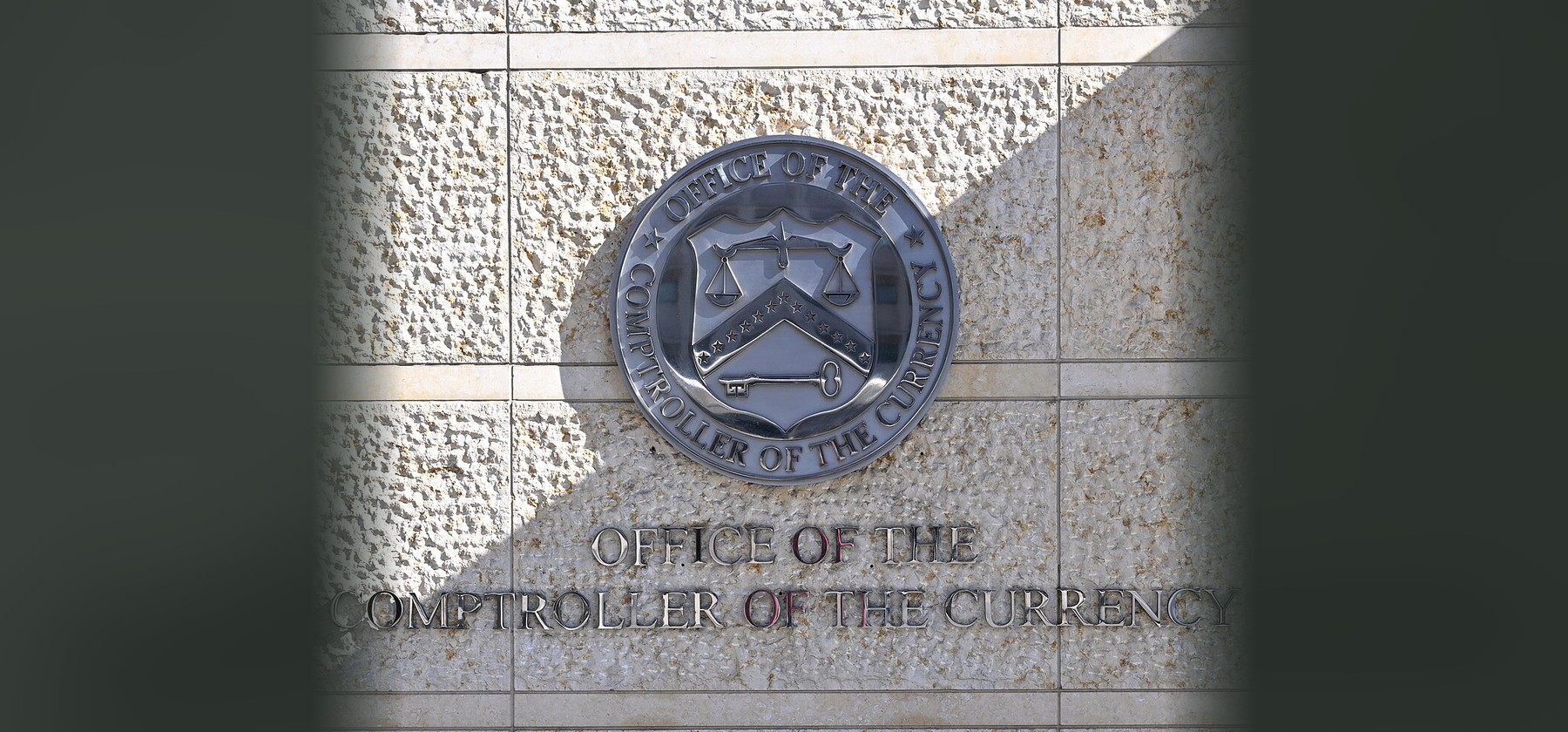
MoonPay has applied to establish a U.S. national trust bank. It has not thereby obtained a new federal charter, a payment stablecoin issuer license, or permission for the proposed institution to start offering services.
The Office of the Comptroller of the Currency (OCC) recorded MoonPay National Trust Bank's application as received on November 18, 2026. The public application is dated November 17; Cointelegraph covered it on November 19. The proposed institution would be based in Miami Beach, Florida, and plans to offer fiduciary digital-asset custody, stablecoin issuance and redemption, reserve management, and conversion services as agent, subject to the applicable approvals. [1][2][10]
The significance for enterprise treasury teams is not the word “Bank.” It is the allocation of responsibility: who issues the asset, who safeguards it, who manages reserves, who owes redemption, and who actually completes the final payment? A single charter cannot answer all five questions.
1. What exactly has MoonPay applied to establish?
The application describes a proposed non-depository national trust bank, with its activities limited to trust company operations and related activities. Its intended services fall into three groups: [2]
Fiduciary custody: custody of digital assets subject to relevant fiduciary and trust obligations.
Stablecoin-related services: proposed issuance, redemption and reserve management.
Conversion as agent: conversion performed in an agency capacity. This is not evidence that the proposed bank would act as principal in every transaction or assume an undisclosed market-making exposure.
The filing also supplies unusually useful information about operating design. MoonPay National Trust Bank would be wholly owned by MoonPay Inc. It proposes to deliver all products and services electronically. It would maintain an office in Miami Beach, but that office would not be open to the public. The organizers state that they do not plan to open branches or move the main office during the first three years. A five-member board is proposed, with the fifth seat still to be filled. MoonPay co-founder and CEO Ivan Soto-Wright would chair the board and serve as interim president and CEO of the proposed bank. These are application disclosures, not evidence of an operating institution. [2]
The public form contains a decisive insurance disclosure: under “Type of Insurance Application,” the checked entry is “Other: No insurance sought.” This is not an application to launch a conventional, deposit-taking retail bank. Federal supervision should not be confused with an FDIC guarantee for customers' digital assets. [2]
Keep the chronology separate: November 17 was the filing date; November 18 was the OCC receipt date; November 19 was the news coverage date. The OCC still listed the application as pending at the November 20 research cutoff. [1][2][10]
2. Why pursue a federal trust-bank structure now?
MoonPay's interest in enterprise stablecoin infrastructure predates this application. In November 2025 it announced enterprise stablecoin services involving M0 infrastructure; in August 2026 it introduced MoonPay Enterprise, describing capabilities spanning pay-ins, conversion, payouts and issuance infrastructure. Those corporate announcements describe MoonPay's existing strategy; they do not establish that MoonPay National Trust Bank has begun operations. [8][9]
Nor is the proposed federal entity MoonPay's first regulatory authorization in New York. The New York State Department of Financial Services (NYDFS) lists two separate entities and approvals. MoonPay USA LLC received New York virtual currency and money transmitter licenses in June 2025, including the BitLicense. MoonPay Trust Company, LLC received approval for a New York limited-purpose trust charter on November 24, 2025. Different legal entities, permissions and supervising frameworks must not be compressed into one “MoonPay bank license.” The pending MoonPay National Trust Bank application is a separate federal process. [6][7][11]
Three potential strategic motives are worth examining, but they are analytical hypotheses, not MoonPay's verified explanation of its application.
First, bringing some custody, issuance, reserve and conversion responsibilities closer together could reduce operational coordination across third parties. The public filing does not establish that this has happened or quantify any cost savings.
Second, a defined federally supervised entity could change how potential financial-institution partners approach governance, custody and due diligence. Approval conditions, contractual arrangements and actual controls would matter more than the label on the charter.
Third, the application falls during the implementation of the U.S. GENIUS Act's payment-stablecoin framework. Timing provides context, but it is not proof of MoonPay's precise commercial motivation. [3][4]
3. The crucial regulatory distinction: a bank charter is not a stablecoin issuer license
There are two distinct approval questions here.
One concerns organizing or converting a national bank subject to the OCC's chartering requirements. The other concerns obtaining approval to issue payment stablecoins as a permitted payment stablecoin issuer under the relevant GENIUS Act framework. [2][4]
This is not merely an inference from legal commentators. In the final rule published in the Federal Register at 91 FR 67110, under the discussion of section 15.30, Application Process (footnote 170), the OCC explains that an applicant seeking an uninsured national trust bank that would also be a permitted payment stablecoin issuer must apply to organize a new national bank under 12 CFR 5.20 (or convert under 12 CFR 5.24) and separately apply under 12 CFR 15.30(a). Those processes rest on different statutory and regulatory requirements. The rule explains a conditional legal pathway; it does not establish that MoonPay has been approved for either new authorization. [4]
The OCC announced its final GENIUS Act rule on October 21, 2026, and the rule and Act are scheduled to take effect on January 18, 2027. The framework addresses matters including reserves, redemption, risk management and specified custody activities. Other elements, including certain Bank Secrecy Act, anti-money-laundering and sanctions provisions, are subject to separate rulemaking. It would be inaccurate to suggest the entire regulatory framework is already fully in force. [3][4]
As of November 20, 2026, the OCC's GENIUS Act application page indicated that it was not yet accepting payment-stablecoin issuer applications or waiver requests, pending the required approval for related information collection. Therefore, the November 18 MoonPay listing should be understood as a bank charter application, not as an approved GENIUS Act issuer status. [5]
The four milestones are not interchangeable: application received ≠ bank charter granted ≠ payment stablecoin issuer approved ≠ proposed services operational.
4. What enterprise buyers need to examine beyond the license name
Cross-border stablecoin payments involve several different forms of financial and operational risk. A transaction visible on-chain is not necessarily a completed commercial settlement.
Start with the issuer and redemption obligor. Who is legally responsible for redeeming the stablecoin, who is eligible to redeem directly, and what screening, timing or contractual limitations apply? A payment service that accepts an asset is not automatically the issuer or its redemption guarantor.
Examine the reserves separately. Reserve composition, ownership, custody arrangements, reporting and liquidity matter. An assertion of full reserve backing does not by itself answer whether redemption can be completed when required. Enterprise buyers need both reserve information and actual redemption terms.
Identify the custodian and the customer's legal rights. Which entity holds the assets? What obligations apply? How would incidents, freezes, recovery or insolvency be handled? The proposed MoonPay bank's detailed business plan and some control information have been submitted confidentially; public summaries cannot establish specific ring-fencing, capital or security outcomes. [2]
Trace conversion and the final payout. A stablecoin redemption, a quoted FX or conversion transaction, and a supplier's receipt of funds at a bank can be separate stages involving separate legal entities and local requirements. Blockchain confirmation time is not the same as end-to-end settlement time.
The relevant unit of evaluation is therefore the entire chain of financial responsibility, not a single regulatory badge.
5. A practical cross-border payments example
Consider a trading business that receives stablecoins from an overseas buyer and later needs local currency to pay a supplier. This is a generic example, not a claim that MoonPay or YiPex serves that particular business.
At receipt, the business must identify the asset, issuer, wallet or account arrangement, ownership and potential source-of-funds concerns. At conversion, it must understand which entity provides the service, what pricing applies and whether the transaction can be completed within the required window. At payout, it must confirm the permitted destination, receiving beneficiary, supporting trade documents and reconciliation process.
The stablecoin issuer, trust custodian, conversion provider, payment service and receiving bank may all be different institutions. MoonPay's proposed structure is one attempt to organize some of those functions in a federally supervised entity, subject to approval. The filing alone cannot establish faster payments, lower pricing, global coverage or enhanced safety outcomes.
A useful diligence request asks each provider to identify its contracting entity, actual fund flow, approval checkpoints, incident escalation owner and final payment obligation.
6. Evidence of a wider shift — or simply another application?
The OCC pending-application page also lists Galaxy National Bank (received October 26, 2026), Rain, Ramp, Modern Treasury and more than ten other digital-asset-related applications. That places MoonPay's move in a broader group of attempts to obtain national-level authorizations. Each listing remains a separate application, however, and no application count should be mistaken for approvals or operational adoption. [1]
The news supplies no reliable figure for the proposed bank's stablecoin issuance volume, reserves, market share or liquidity. Nor does it show lower industry-wide payment costs. To assess a structural shift, observers would need to track approvals, permitted activities, live product launches, customer uptake, reserve and redemption performance, and verifiable links to traditional payment rails.
What the evidence supports: MoonPay seeks to put certain contemplated stablecoin, custody and reserve activities within a proposed federally supervised trust-bank structure.
What it does not support: that the new bank has been chartered, that a separate issuer license has been granted, that a particular stablecoin is being issued by the proposed bank, or that enterprise customers have already benefited from lower cost or guaranteed protection.
Sources
- 1OCC, Digital Assets Licensing Applications (checked November 20, 2026)
- 2OCC, MoonPay National Trust Bank public application (dated November 17, 2026)
- 3OCC, final GENIUS Act rule news release, October 21, 2026
- 4Federal Register, 91 FR **67110**, section 15.30 Application Process, footnote 170, October 23, 2026
- 5OCC, GENIUS Act licensing application status, checked November 20, 2026
- 6NYDFS, Virtual Currency Business Licensing
- 7NYDFS, Weekly Banking Bulletin, November 28, 2025
- 8MoonPay, enterprise stablecoin services announcement, November 12, 2025
- 9MoonPay, MoonPay Enterprise announcement, August 6, 2026
- 10Cointelegraph, reporting lead, November 19, 2026
- 11MoonPay, New York BitLicense announcement, June 4, 2025