
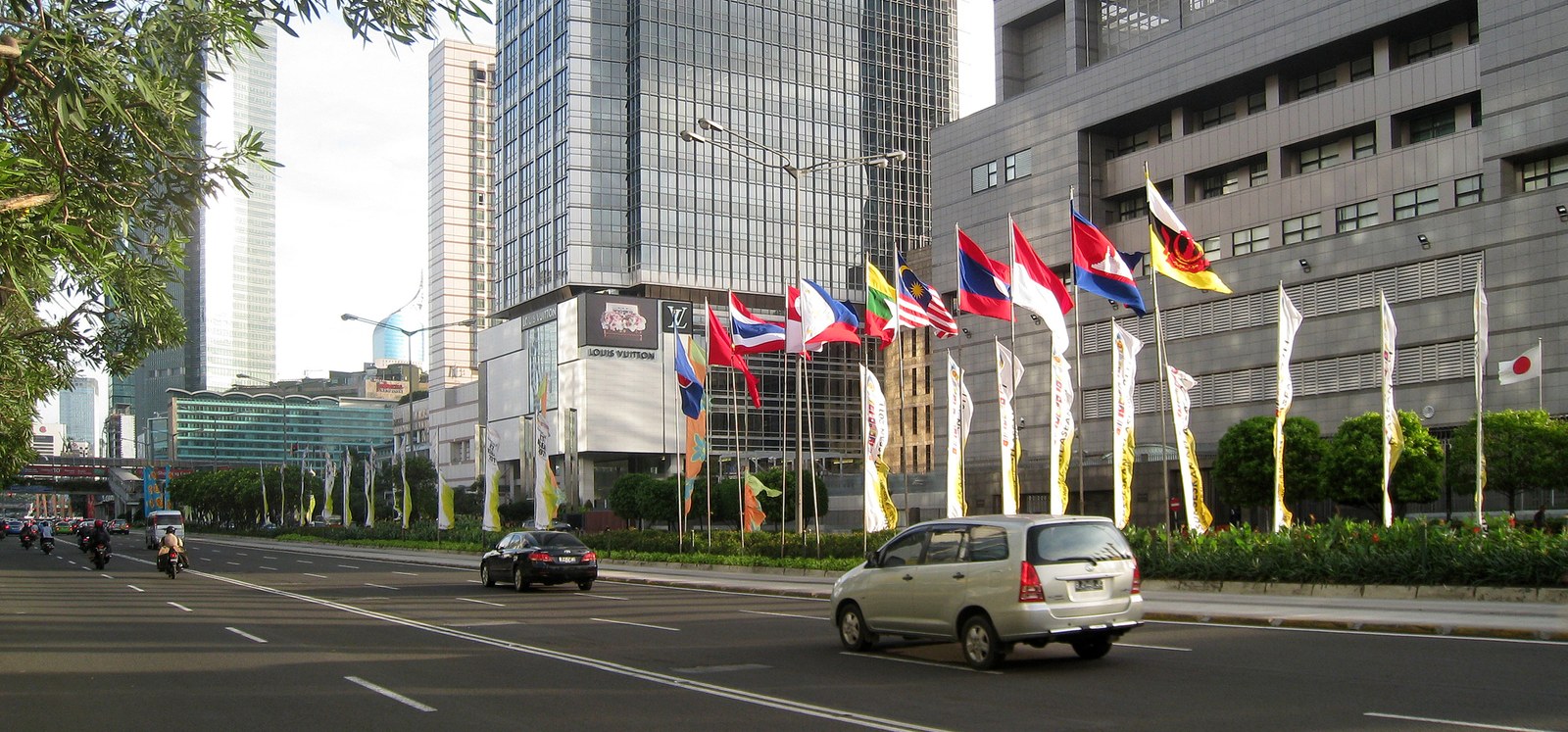
On 26 November, Japan's Ministry of Finance released the outcomes of the ASEAN+3 finance and central bank deputies' meeting in Kyoto. Japan and the Philippines co-chair the process in 2026. Five of the six published milestones concerned the amended Chiang Mai Initiative Multilateralisation (CMIM) agreement and its rapid financing facility, AMRO's medium-term implementation plan, governance of the paid-in capital legal entity, the Asian Bond and Financial Markets Initiative (ABFMI) roadmap and progress on the Disaster Risk Financing Initiative (DRFI) roadmap. The sixth, the subject of this article, concerns payments: deputies agreed to establish the ASEAN+3 Macroeconomic Research Office (AMRO) Cross-Border Digital Payments Program and a dedicated working group to advance dialogue on retail and wholesale payment connectivity and approaches to digital asset regulation. [1][2]
That is not an agreement to adopt a common digital currency. Ministers and central bank governors had already identified cross-border digital payments as a new area of cooperation in May, explicitly including stablecoin regulation. Kyoto supplies a more concrete institutional arrangement for that discussion.
Connecting two national payment systems is only part of the challenge. Regional cooperation must also address how different financial infrastructures and regulatory regimes can work together. As stablecoins allow value to move outside conventional bank account networks, technical compatibility and regulatory coordination become increasingly difficult to separate.
From Samarkand to Kyoto: what changed?
On 3 May, at the 29th ASEAN+3 finance ministers and central bank governors' meeting in Samarkand, Uzbekistan, participants welcomed AMRO's research on regional payment connectivity. They tasked deputies, with AMRO support, with agreeing an appropriate mechanism for continuing policy dialogue before year-end. A dedicated working group was then one possible option. Paragraph 18 of the joint statement covered retail and wholesale payment connectivity and stablecoin regulation, alongside technological innovation built on domestic-currency payment systems and consideration of monetary sovereignty, financial stability and capital flow management. [3]
At the 25–26 November deputies' meeting in Kyoto, the concrete change was the agreement on an institutional mechanism: the AMRO programme and dedicated working group. It was not an agreement on common conditions for issuing or using stablecoins. The May text specifically mentions stablecoins; November uses the broader category of digital assets. The two statements are issued at different levels, however: a ministerial and central bank governors' joint statement in May, and a deputies' co-chairs' statement in November. The breadth of their wording is not by itself evidence of a change in policy priority. The observable progress is the decision to establish the working group. Stablecoins clearly form part of the background to this discussion, but the texts do not establish that Kyoto approved any particular stablecoin or settled the scope of digital asset regulation. [1][2][3]
The Kyoto outcomes are due to be reported and discussed at the ASEAN+3 finance ministers and central bank governors' meeting in Nagoya, Japan, in May 2027. [2] That is a reporting milestone, not a date for new rules to take effect. The published documents do not specify a complete mandate, operational start date, common licensing requirements or a list of newly permitted cross-border activities.
Why connect existing payment systems while discussing stablecoins?
A fast domestic payment experience does not necessarily carry over to international transactions. Currency conversion, different banking hours, compliance checks, inconsistent payment messages and limited cross-border liquidity can all introduce friction.
The Financial Stability Board's (FSB) 2026 progress report on the G20 cross-border payments roadmap, released on 16 November, found that international policy development was largely complete, but improvements for end users remained slow and uneven across regions and payment types. Implementation within jurisdictions and regions, together with public-private cooperation, remains important. [4] AMRO's May study likewise identifies institutional differences, technical gaps and scalability constraints in regional connectivity. [5]
Southeast Asia already has experience connecting conventional payment systems. In April 2021, the Monetary Authority of Singapore and Bank of Thailand announced the PayNow–PromptPay linkage. Customers of eligible participating banks could remit money using a recipient's mobile number. The launch included daily limits and plans to expand participation and transaction limits. [6] Linking domestic instant payment systems can simplify the customer experience without requiring a stablecoin.
Yet creating a separate set of technical interfaces, foreign exchange arrangements and operating rules for every pair of markets can become expensive to build and maintain as the network expands. The Bank for International Settlements' (BIS) Project Nexus explores a standardised approach to connecting multiple domestic instant payment systems. Its project page records a technical, governance and business blueprint in 2024 and the formation of Nexus Global Payments by participating central banks in 2025 to advance implementation. [7] Nexus is separate from the Kyoto initiative; these milestones do not establish that every member's instant payment system is connected. Its significance is the possibility of moving from individual bilateral links towards a more scalable multilateral arrangement.
Retail connectivity is advancing. Why is wholesale settlement harder?
Retail payments typically include person-to-person transfers, travel spending and merchant payments, with emphasis on access, convenience and affordability. Wholesale payments involve transfers between financial institutions and large-value settlement, with more complex liquidity and settlement risks.
A company paying an overseas supplier may see only a single transfer. Behind the scenes, its bank may need to obtain foreign currency, settle with other institutions and arrange credit to the beneficiary. The speed of submitting an instruction is not the speed of settling the whole transaction. Suppose a bank in one country has processed its customer's instruction, but the relevant settlement system in the destination country is closed. Instant message delivery does not remove that wait. This is an illustrative mechanism, not a claim about a particular corridor.
As background before the meeting, AMRO's director discussed wholesale foreign exchange settlement and liquidity on 15 October; that speech is not a Kyoto decision. [8] The BIS Committee on Payments and Market Infrastructures (CPMI) also highlights how better-aligned settlement system operating hours and access policies can improve cross-border payments while maintaining appropriate safety standards. [9]
Kyoto's inclusion of both retail and wholesale payments is therefore significant. Better customer-facing payment interfaces are only part of the problem. Institutions must exchange information, convert currencies, manage liquidity and establish settlement finality. Faster initiation alone may do little to reduce total treasury costs if those back-end processes do not improve.
Stablecoins are not a new common regional settlement currency
Tokenised forms of money can offer alternatives to conventional account-based transfer mechanisms, but similar technology does not make their legal and economic claims identical.
A stablecoin generally aims to maintain a reference value. Whether holders can redeem it at par, who bears redemption obligations and how reserves are managed depend on its design and applicable law. Tokenised bank deposits represent claims on commercial banks, whereas central bank digital currencies represent central bank liabilities. They may share features such as digital records and programmability without representing the same settlement asset.
Project Agorá, a BIS and Institute of International Finance collaboration, illustrates another approach. Its May 2026 prototype explored combining tokenised commercial bank deposits and central bank reserves on a shared platform for atomic, multicurrency wholesale settlement: the linked settlement steps either all complete or none does. [10] In a 3 November speech, the BIS said the prototype had been tested using real-value transactions, while emphasising that experimentation does not prejudge future policy or technology adoption. [11] Agorá is neither an implementation plan of the Kyoto working group nor a project to use private stablecoins as central bank reserves.
Private stablecoins can transfer value on supported networks and may provide an alternative intermediate funding route in certain use cases. On-chain confirmation, however, establishes a change in asset state under that network's rules. It does not automatically deliver spendable local currency to the beneficiary, or guarantee that redemption, conversion and bank credit occur together. A business that ultimately needs to pay local suppliers or employees still depends on connectivity to local financial systems.
Assessing a payment instrument therefore requires more than comparing transfer speeds. The relevant considerations include the complete payment chain, final settlement asset, redemption terms, foreign exchange liquidity and regulatory acceptance.
What tensions would regional stablecoin regulation need to address?
Technical networks can cross borders more readily than regulatory authority. Issuers, custodians, intermediaries, senders and beneficiaries may be in different jurisdictions. If those jurisdictions classify assets, license activities and allocate risk responsibilities differently, an institution cannot infer compliance across the entire transaction from permission in one market alone.
The FSB's July 2023 high-level recommendations for global stablecoin arrangements address cross-border supervisory cooperation, risk management, redemption rights and compliance with local requirements before commencing operations. [12] They seek greater consistency in regulatory outcomes while allowing domestic implementation. They provide an international reference point, not a list of rules adopted by the Kyoto working group.
Monetary sovereignty is another constraint. AMRO's November 2025 stablecoin research describes potential cross-border payment benefits alongside the risk that extensive foreign-currency stablecoin use could accelerate currency substitution, complicate capital flow management and weaken domestic monetary policy transmission. [13] These concerns echo the May ASEAN+3 statement's emphasis on financial stability and domestic-currency payment systems.
Consider an economy where companies generally receive and pay in domestic currency. Holding foreign-currency stablecoins might help an individual business reduce friction when moving funds internationally. Widespread adoption for domestic pricing, saving or payments, however, could have different macroeconomic effects from a single trade settlement. Regulators must weigh innovation against possible changes in demand for domestic money and patterns of cross-border capital flows. This is an economic mechanism, not a policy announced at Kyoto.
Future coordination need not mean that every jurisdiction accepts the same stablecoin or adopts an identical licence. Possible areas to watch include comparable approaches to higher-risk activities, sharing relevant risk information, allocation of responsibilities across institutions, and interoperability between digital forms of money and local payment systems within existing legal constraints. These are analytical possibilities, not an agreed working-group agenda.
What would turn policy dialogue into usable payment services?
For financial institutions and trading businesses operating across East and Southeast Asia, the decision announced in Kyoto does not by itself establish changes to legal market access, lower fees or new settlement limits. Its immediate value is an institutional channel for continuing discussions.
Three kinds of progress matter. First, whether the working group publishes a specific mandate and priorities for retail, wholesale and digital asset topics. Second, whether existing instant payment links and wholesale settlement experiments can develop compatible rules, messaging standards, risk responsibilities and exception handling. Third, whether stablecoins and related instruments gain clearer regulatory classification, access and redemption arrangements, and how these would connect to domestic-currency settlement.
Policy cooperation can translate into additional services only when relevant rules, infrastructure and operating arrangements are in place. Meaningful measures of progress would then be end-to-end delivery time, total fees including foreign exchange costs, supported transaction types and availability, settlement failure rates and exception handling, rather than the number of working-group members or speed of a single blockchain transfer.
Nagoya in May 2027 offers a next checkpoint. From the proposal for a mechanism in Samarkand to the decision in Kyoto to establish a dedicated group, regional payments cooperation has moved one step towards sustained policy coordination. The future role of stablecoins will depend on how economies balance connectivity, regulatory responsibilities, financial stability and domestic monetary systems, not simply on whether a particular technology is available.
Sources
- 1Japan Ministry of Finance, 26 November 2026, official Kyoto meeting release
- 2ASEAN+3 Finance and Central Bank Deputies' Meeting co-chairs' statement, Kyoto, 26 November 2026
- 3AMRO, Joint Statement of the 29th ASEAN+3 Finance Ministers and Central Bank Governors' Meeting, 3 May 2026, paragraphs 18 and 21
- 4FSB; G20 Roadmap for Enhancing Cross-border Payments: Consolidated progress report for 2026; 2026-11-16
- 5AMRO; ASEAN+3 Cross-Border Payments, Regional Connectivity, and Way Forward; 2026-05-04 (report overview and abstract)
- 6MAS/BOT; Singapore and Thailand Launch World's First Linkage of Real-time Payment Systems; 2021-04-29
- 7BIS; Project Nexus project page, accessed 27 November 2026
- 8AMRO; From Connections to Integration: Shaping the Future of Cross-Border Payments in ASEAN+3; 2026-10-15
- 9BIS/CPMI; Cross-border payments programme; accessed 27 November 2026
- 10BIS; Project Agorá: a shared programmable platform for wholesale cross-border payments; 2026-05-27
- 11BIS; The BIS approach to global public-private collaboration; 2026-11-03
- 12FSB; High-level Recommendations for the Regulation, Supervision and Oversight of Global Stablecoin Arrangements; 2023-07-17
- 13AMRO; Stablecoin: Implications for the ASEAN+3 Region; 2025-11-21
- 14TechFlow, 27 November 2026, related coverage